

For plastic to truly be part of a circular economy, it must be recycled to a standard that makes it suitable for use in new packaging or equivalent products. With Site Zero, we make exactly that possible: high-quality recycling that preserves the material’s value and reduces the need for new fossil-based plastic.
Our recycling contribution
Every year, we measure the proportion of plastic packaging received at Site Zero that is ultimately turned into new recycled raw material. We call this metric our recycling contribution – and it reflects our contribution to the national recycling targets.
In 2025, we recycled 37,819 tonnes of plastic packaging – just over 7,000 tonnes more than the previous year. Over half, 50.9 per cent, has been turned into recycled raw material for new packaging or products.
This outcome is the result of determined efforts both internally and in close collaboration with our recyclers, with the aim of stabilising operations, optimising and developing sorting processes, and securing new market opportunities.
This is how the recycling levy is calculated
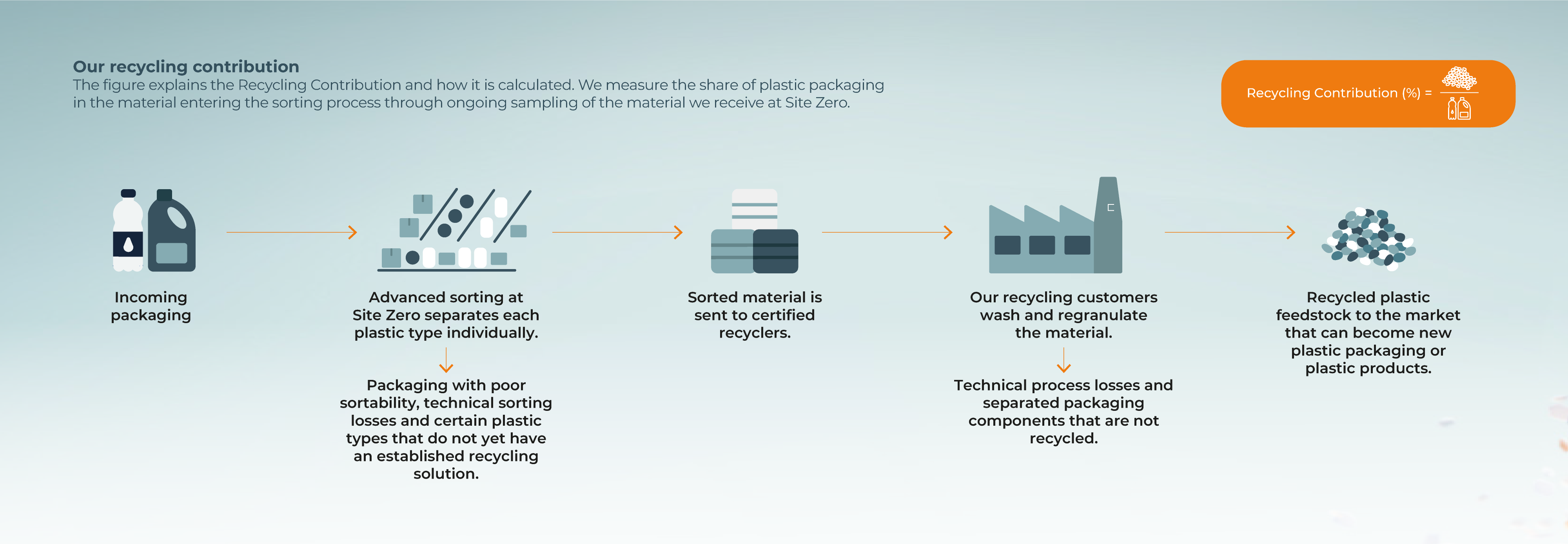
What determines our recycling levy?
The recycling contribution is determined by three factors: how effectively we sort our waste, whether there are recyclers for the material, and how efficient their processes are. None of these factors is entirely within our control; they are influenced by the entire value chain.
That is why we are actively involved at various stages and are driving development in three key areas that affect our recycling contribution:
What happens to the recycled plastic?
We have 100 per cent traceability and know exactly what the recycled plastic is actually used for in its next life. 86 per cent is turned into high-quality raw material, of which: 25 per cent becomes new plastic packaging, such as fruit trays, drinks bottles, laundry and washing-up liquid bottles, yoghurt pots, shampoo bottles, etc.
61 per cent is turned into high-quality plastic products: for example, shopping bags, bin liners, plant pots, cleaning equipment, larger containers, and plastic components for household appliances and cars.
14 per cent is recycled into low-quality products: for example, pallets, cable drums, building and construction materials, and synthetic fibres. Reducing this proportion is a key objective in our work towards better packaging design and new recycling solutions.
Challenges we face
The infrastructure is in place. Site Zero has the capacity to process Sweden’s entire output of plastic packaging and sorts 1,000 items of packaging per second into twelve separate plastic categories. But for the recycling system to work properly, the right materials must enter the system — in sufficient quantities and of sufficient quality.
Collection is currently the single biggest shortcoming. Too little plastic reaches the recycling system, and what is collected is of lower quality than in several comparable countries. This directly affects the proportion that can be recycled to a high standard.
Incorrectly sorted items make sorting even more difficult. Batteries that end up in the plastic packaging by mistake are particularly problematic — they cause fires at the plant, production stoppages and pose a safety risk to staff.
We are working actively with local authorities and producers to increase both the volume and quality of the material collected.
